
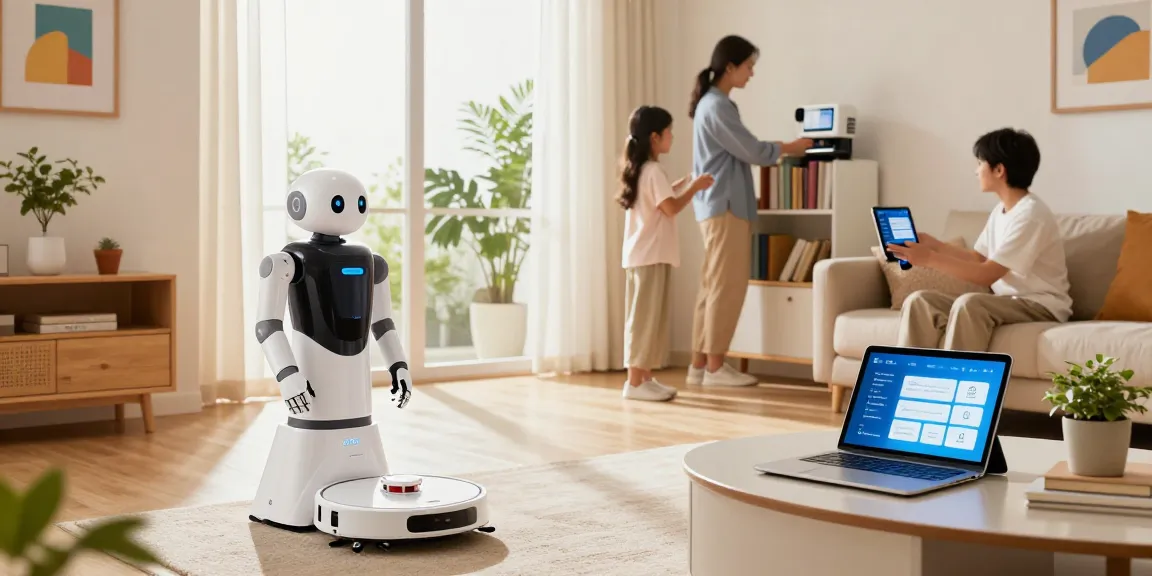
The Rise of Home Robots in 2026
As we step into 2026, the landscape of robotics is set to transform the way we manage our households. Home robots are evolving beyond simple tasks and are becoming essential companions in our daily lives. From vacuuming to complex cooking tasks, these innovations promise to revolutionize our routines. Yet, the question remains: are we ready for a domestic revolution? When exploring options, home robot 2026 technologies are coming to the forefront, offering solutions that blend seamlessly into our smart homes.
What to Expect from Home Robot Technology?
In 2026, we can expect home robots equipped with advanced artificial intelligence (AI) and machine learning capabilities that significantly improve their functionality. These robots will be capable of performing intricate tasks such as meal preparation, laundry, cleaning, and even security monitoring. As manufacturers invest in more sophisticated algorithms, home robots will not only follow commands but also learn from their environments and adapt to the habits of their users.
Furthermore, the integration of the Internet of Things (IoT) will enable home robots to communicate with other smart devices in your home. Imagine a scenario where your robot helps with your morning routine by preparing coffee while your smart mirror provides updates on the weather and news. This interconnectedness will make home management remarkably efficient and effortless.
Common Misconceptions About Home Robots
Despite the exciting advancements, there are prevalent misconceptions about home robots. Many believe they are exclusively designed for the wealthy or that they will replace human jobs. However, the reality is that home robots serve as tools to assist and enhance the quality of life for everyone, not just affluent households. They can perform repetitive tasks, freeing up your time for more meaningful activities, and they can foster greater productivity in busy households.
Another misconception is the idea that home robots will require extensive programming and technical knowledge to operate. Most new systems are designed with user-friendliness in mind, featuring simple interfaces and voice activation options that make them accessible to users of all ages.
How Home Robots Are Evolving for Daily Use
To meet the diverse needs of households, home robots are undergoing rapid evolution. Today’s robots can accomplish a wide range of tasks beyond basic cleaning. For example, cooking robots are now capable of preparing various cuisines by following recipes with precision, while laundry robots can sort, wash, and fold clothes. The development of specialized multifunctional robots is paving the way for comprehensive solutions for household management.
In addition, robots are starting to incorporate more human-like characteristics. Many new models come with advanced sensory systems that allow them to avoid obstacles, recognize faces, and even respond to emotions—enhancing their roles as companions in the home.
Top Home Robots to Watch in 2026
Introducing the NEO Home Robot
Among the most anticipated innovations is the NEO home robot, which promises to redefine home assistance. The NEO is designed to handle household chores effectively while maintaining an engaging user interface. It can automate tasks like vacuuming, sweeping, and even organizing items around the house. With enhanced AI capabilities, the NEO can learn your preferences over time, making it an ideal choice for personalized home management.
LG’s CLOiD: What Makes It Stand Out?
LG introduced CLOiD at CES 2026, marking a significant leap in home robotics. CLOiD is not just a helper; it’s a multifunctional device capable of cooking, cleaning, and even administering medication reminders. Its AI integration allows it to adjust recipes according to dietary needs, making meal preparation easier for families. CLOiD also provides safety features like monitoring the house when no one is home, combining utility with security.
Comparing Costs: Are They Worth the Investment?
As we look at the pricing of home robots in 2026, it’s essential to analyze the long-term value they offer. While initial investments can be steep, ranging between $5,000 to $20,000 depending on features and capabilities, the cost should be weighed against the time saved and convenience provided. Households can expect substantial savings in services previously required for cleaning, security, and even meal preparation. Therefore, the investment in a home robot not only offers immediate assistance but also promotes a more organized and manageable home environment.
Integrating Home Robots into Your Smart Home
Best Practices for Setting Up Home Robots
To maximize the effectiveness of your home robot, proper setup is crucial. Begin by ensuring that your home has a strong Wi-Fi connection, as most robots will require internet access for functionality and updates. Create a clear space for the robot to navigate—removing clutter allows the robot to perform tasks more efficiently.
- Regularly update the robot’s firmware to benefit from new features and improvements.
- Utilize mobile apps associated with your robot for easy scheduling and monitoring.
- Keep the robot’s sensors clean for optimal performance.
How to Maximize Efficiency with Home Robots
Efficiency can be significantly enhanced by strategically utilizing your home robot’s scheduling features. By programming your robot to complete tasks during off-peak hours—such as when you’re at work or asleep—you can ensure that your nightly cleaning or laundry tasks are completed without disturbing your daily routine. Additionally, make use of automation features that link your robot with other smart home devices, such as starting the robot when your smart thermostat detects you’re not home.
Real-Life Examples of Home Robot Use Cases
Many families are already witnessing the benefits of integrating home robots into their daily lives. For instance, a typical scenario might involve a family using a cleaning robot to maintain a tidy living space while they focus on work or family time. Another example includes utilizing a cooking robot that can prepare meals according to pre-set family preferences and dietary restrictions, enhancing both convenience and health.
Future Trends in Home Robotics
What Innovations Will Shape the Future?
The future of home robotics looks bright with promising innovations on the horizon. Robotics combined with AI will enable more sophisticated interactions, allowing robots to understand and predict user needs better. Developments in machine learning will lead to continuous self-improvement, where robots adapt their functions based on user behavior, creating a truly responsive home environment.
Moreover, advancements in energy efficiency will likely emerge, ensuring that these robots consume less energy while performing their tasks. The continuation of miniaturization will also enhance robot capabilities, allowing them to be equipped with more features without increasing their size.
Potential Impact on Daily Life and Chores
The integration of smarter robots into our daily routines is expected to change how we perceive chores. As robots take on more household responsibilities, people will find themselves with additional time to spend on leisure activities, family bonding, or personal projects. This shift will lead to a greater work-life balance and potentially improve overall well-being.
Predictions for Home Robots Beyond 2026
Looking beyond 2026, we can anticipate further advancements that may bring us closer to fully autonomous home robots capable of completing a broader array of tasks. The concept of a robot that can not only manage chores but also provide companionship and support in social situations is becoming increasingly feasible. As technology continues to evolve, our homes will likely become a blend of comfort and cutting-edge robotics.
Frequently Asked Questions about Home Robots
What can home robots do for me?
Home robots can assist with a wide range of tasks, including cleaning, cooking, laundry, and security monitoring. Their primary function is to ease the burden of daily chores, allowing you to spend your time on more meaningful activities.
How safe are home robots for my family?
Most home robots are designed with safety features, such as obstacle detection and emergency shut-offs. Additionally, they operate using low-voltage systems and are built to avoid causing harm to people or pets within the home.
What’s the average cost of a home robot in 2026?
The costs of home robots in 2026 vary considerably, from a few hundred dollars for basic models to upwards of $20,000 for advanced units with multiple functions and AI capabilities. The investment should reflect the range of tasks the robot can perform.
Can home robots learn and adapt to my needs?
Yes, many modern home robots come equipped with machine learning algorithms that enable them to learn from their environment and user preferences over time. This ability allows them to improve their performance and efficiency.
Are home robots environmentally friendly?
Home robots are increasingly designed with sustainability in mind, often using energy-efficient systems and materials. Their ability to conduct tasks more efficiently than humans can also lead to reduced energy consumption overall.