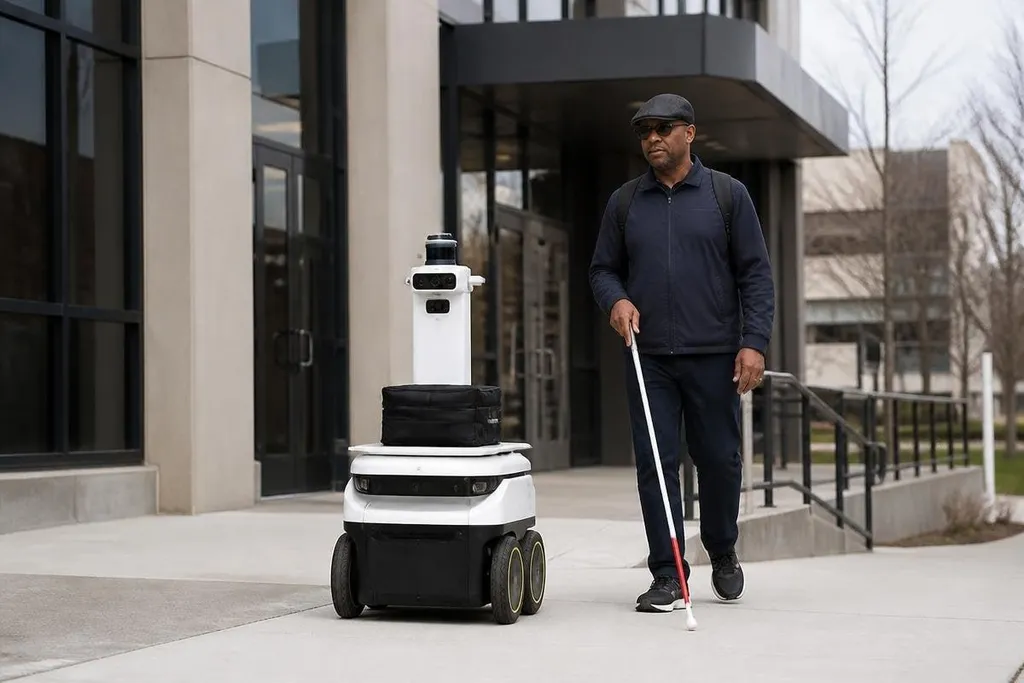
A mobility robot can carry a bag, guide a person through a building, or move beside someone who needs support. Its usefulness depends on what happens after the robot leaves a controlled room: doors, lifts, kerbs, crowds, and uneven ground decide whether the task works.
- Main benefit: carrying, guiding, or fetching can reduce physical effort.
- Main limit: sensors and motors can't fix blocked paths or unsafe buildings.
- Main test: the robot must complete a full trip, not one short demonstration.
What mobility robots can do
Most mobility robots combine a powered base with sensors, software, and a way to carry or move objects. A platform with wheels may transport groceries, medicines, or a small load. A robot arm can reach a button, pull a handle, or pick an item from a low shelf.
The task matters more than the shape. A person with limited leg strength may need a robot that carries a bag across a building.
Someone with low vision may need spoken directions and safe obstacle detection. A person using a wheelchair may need help reaching doors, lifts, or items placed beyond arm's reach.
LiDAR measures distance with laser pulses, while a depth camera builds a view of nearby objects. Together, these sensors can help a robot detect walls, people, and furniture. They still need clear software rules for a child who runs across the path or a chair left in a narrow passage.
The route is part of the system
A robot can move well on a smooth floor and still fail at the building entrance. A raised threshold, a heavy door, a broken lift, or a steep ramp can stop the trip before the useful task begins.
That makes accessibility a route problem as much as a robot problem. The robot needs enough clearance to turn, a safe way to cross changes in floor height, and a reliable method for calling a lift or opening a door. If a person must take control at every obstacle, the robot has shifted the work rather than removing it.
Public spaces add more variables. Pavement may be crowded, rain can reduce sensor quality, and road crossings require decisions that carry real safety risk. A person also needs to know what the robot will do when it stops, loses its map, or meets an object it can't classify.
Human control still matters
Remote help can cover problems the robot can't handle alone. A trained operator may check a camera view, select a safe route, or guide the robot past a blocked doorway. That support needs a clear handoff, because a delayed response leaves the person waiting beside the obstacle.
An emergency stop should be easy to reach. The robot should also give a clear sound, screen message, or spoken alert when it stops. These details matter for people who can't see a warning light or reach a button placed on the rear of the machine.
A mobility robot's move from a lab into a public building needs a dated trial and a clear task. Robot24.com mobility robotics coverage can show whether the system works with the people it is meant to assist.
Privacy needs a place in the design as well. Cameras may record faces, room layouts, or medical details during a normal trip. A mobility robot should collect only what the task needs, explain when sensing is active, and give people a way to pause or refuse recording.
What good testing looks like
A short route inside an empty room says little about access. Testing should follow the person's full trip, including the normal obstacles between the start and finish.
Use this checklist before buying or approving a mobility robot:
- Map the route: record doors, thresholds, lifts, ramps, narrow turns, and outdoor sections.
- Name the user: state whether the task serves a wheelchair user, a person with low vision, or someone with limited strength.
- Test failure handling: check what happens after a blocked path, lost map, low battery, or sensor error.
- Check human control: set a response time for remote help and place the emergency stop where the person can reach it.
- Review privacy: document what the cameras and microphones collect, where it goes, and when recording stops.
- Measure the full task: count waiting time, manual help, missed doors, and completed trips.
I'd judge a mobility robot by the help it removes from a person's day, not by how smoothly it crosses an empty room.
What happens next
The useful projects will pair robots with better routes, clear building access, and staff who can respond when the machine stops. Until those pieces are tested together, a mobility robot remains a promising aid for a narrow task, not a general answer to accessibility.